Homeowners Insurance Water Damage Coverage in Indian Creek Estates

It usually starts the same way. You walk into the kitchen at 6 a.m. for coffee and your socks soak through before you reach the counter. Or you head downstairs to grab the laundry and hear that hollow splash that tells you the carpet pad is already gone. Within minutes the question shifts from what happened to who pays for it, and that is the moment most Indian Creek Estates homeowners pull up their insurance policy for the first time in years and try to decode what their coverage actually says.
At Indian Creek Estates Water Restoration, we have been answering that question since 2018 for families across central Indiana, and the honest answer is more nuanced than a yes or a no. Your homeowners policy probably covers a meaningful portion of what just happened to your home, but coverage hinges on the source of the water, how quickly you acted, and whether you can document the damage in language an adjuster understands. As an IICRC certified, BBB A+ rated restoration company, we work alongside adjusters every week, and we have learned exactly which details make claims move and which ones stall them. If we look at your situation and tell you insurance will not help, we will say that directly so you can plan accordingly instead of waiting on a denial letter.
What types of water damage does a standard homeowners policy actually cover?
Most standard HO-3 policies in Indian Creek Estates cover water damage that is sudden and accidental. That language matters. If a supply line under your kitchen sink bursts at 2am, that is sudden. If your roof gets hammered by a spring storm and water pours into the attic, that is accidental. Both are typically covered. Burst pipes, appliance failures, water heater ruptures, ice dam intrusion, and storm driven rain through a damaged roof all fall inside the coverage window for most carriers.
Coverage usually extends to the structure itself (drywall, flooring, cabinetry, insulation) and to your personal property under a separate contents limit. If the water is Category 1 (clean) or Category 2 (grey), insurance generally pays for professional extraction, drying, antimicrobial treatment, and rebuild. For a deeper look at how those categories shape the claim, our writeup on grey water damage and Category 2 cleanup walks through what adjusters look for.
One nuance worth knowing: most policies cover the resulting water damage but not the failed component itself. If your washing machine hose splits and floods the laundry room, the carrier pays to dry the room and replace the flooring, but they will not buy you a new hose or a new washer unless you have equipment breakdown coverage. The same logic applies to a cracked toilet tank, a ruptured water heater, or a failed dishwasher pump. Read your policy summary to see exactly where that line sits in your contract.
What steps should I take in the first hour to protect my claim?
Insurance adjusters in Indian Creek Estates look for two things: did you stop the loss from getting worse, and did you document the original condition? You can do both in under sixty minutes. Shut off the water at the source or the main if you cannot find the source. Kill power to any room with standing water if it is safe to reach the breaker. Take photos and short video clips of every wet surface before you move anything.
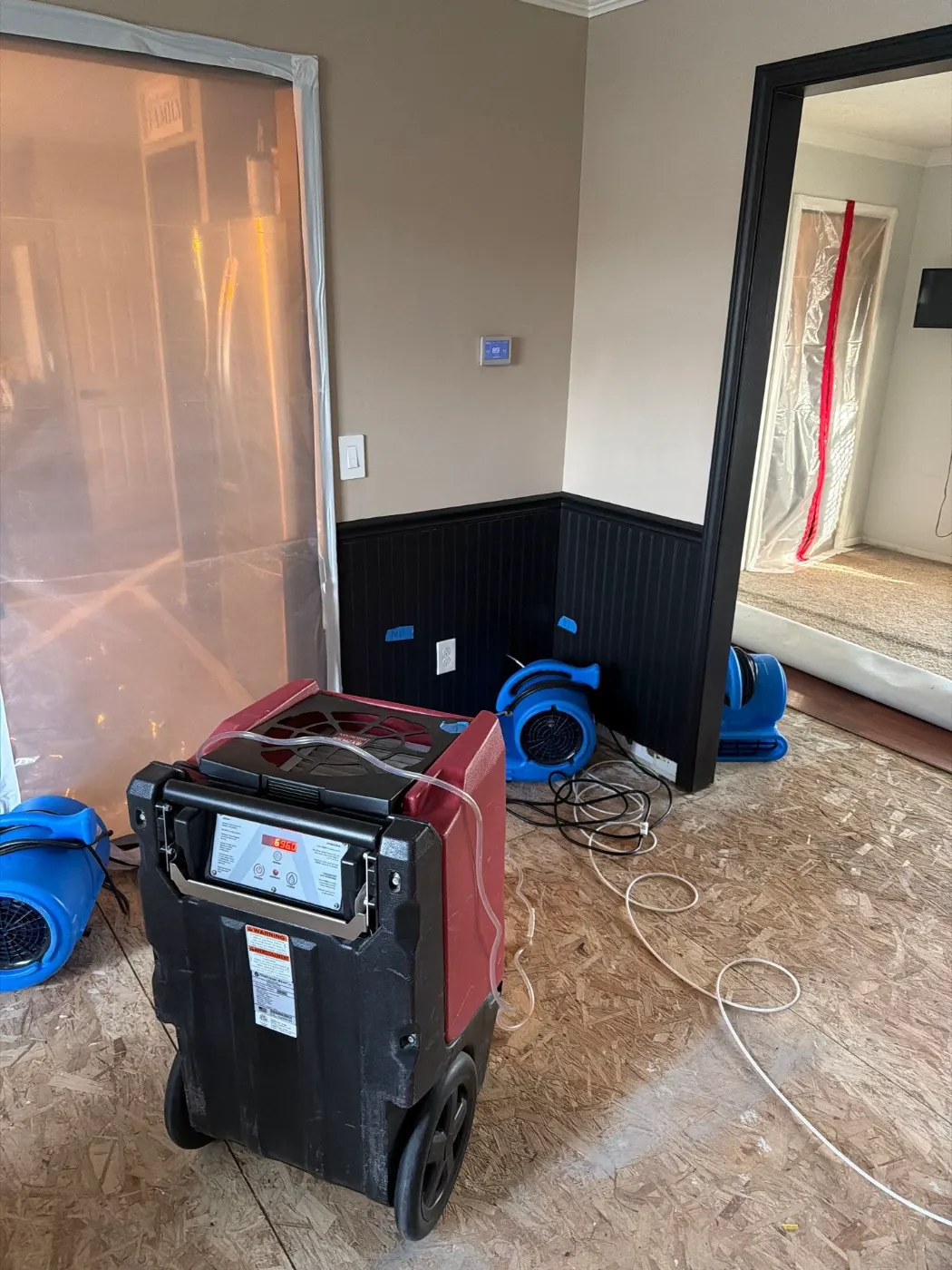
Call your insurance carrier to open the claim and get a claim number. Then call a restoration company. You are not required to use a contractor your insurance recommends, and you have the right to choose anyone licensed and IICRC certified. Indian Creek Estates Water Restoration can be on site in Indian Creek Estates the same day, document moisture readings, set drying equipment, and send the carrier a scope written in claim language they recognize. Keep receipts for anything you buy (fans, tarps, hotel rooms if your home is unlivable) because those go on the loss of use side of the claim.
How does the adjuster decide what to pay, and can I push back?
Your adjuster works from a scope of damages and a pricing database (usually Xactimate). They walk the home, measure rooms, note materials, and compare line items against regional pricing for Indian Creek Estates. The first offer is rarely the final number. If your restoration contractor finds hidden damage behind a wall or under flooring once demolition starts, that goes into a supplemental claim. Carriers expect supplements on water losses because moisture migrates in ways no one can see on day one.
You can absolutely push back. Ask for the line item estimate, compare it to the scope Indian Creek Estates Water Restoration writes, and flag missing items like detached structures, code upgrades, or specialty drying for hardwoods. Most disputes get resolved through documentation, not arguments.
What water damage situations are almost never covered?
Two big exclusions trip up Indian Creek Estates homeowners every week. The first is flood. Surface water that rises from outside your home, whether from a swollen creek, overwhelmed storm drains, or saturated ground, is not covered by standard homeowners insurance. You need a separate NFIP or private flood policy for that. The second is gradual damage. If a slow leak under your bathroom vanity has been rotting the subfloor for six months, your carrier will likely deny the claim on the grounds that you failed to maintain the property.
Other common exclusions include sewer or drain backup (unless you bought the rider), groundwater seepage through foundation walls, damage from a sump pump failure (also a rider in most cases), and any mold that grew because the original leak was not addressed quickly. Wear and tear on plumbing, corroded pipes, and faulty workmanship from a prior contractor are also off the table.
What if my claim gets denied, can I still get help?
Denials happen, and they are not always final. Common reasons include misclassifying the loss as gradual, missing documentation, or an exclusion the homeowner did not know applied. You can request the denial in writing, ask for the specific policy language cited, and appeal with additional evidence. A licensed public adjuster can help on larger losses.
Even if the claim sticks as denied, the damage in your Indian Creek Estates home does not pause. Mold can start growing within twenty four to forty eight hours, and wet structural materials lose integrity fast. We offer flexible payment plans and will scope the work down to essentials if you are paying out of pocket. The goal is to dry the structure, kill the contamination risk, and keep the repair bill from doubling because of a delay.
What does my deductible look like on a water damage claim?
Most Indian Creek Estates homeowners carry a deductible between five hundred and two thousand five hundred dollars. That number comes off the top of your settlement. If your total loss runs eight thousand dollars and your deductible is one thousand, the carrier pays seven thousand and you cover the rest. Some policies have a separate, higher deductible for water losses or wind driven rain, so check the schedule on page two or three of your declarations.
Before you file, do the math. If your damage is mostly cosmetic and the total bill might land near your deductible, filing could hurt your premium without much payoff. We will give you an honest estimate on a free inspection and tell you whether a claim makes sense. If you want a sense of the numbers, our water damage restoration cost breakdown shows real ranges by job size.
Keep in mind that filing frequency matters too. Two water claims inside a three year window can push you into a non renewal in some Indian Creek Estates markets, or bump you to a non standard carrier at a much higher rate. That does not mean you should swallow a major loss out of pocket, but it does mean small nuisance claims are rarely worth the long term cost.
Is sewer backup covered, and how do I know if I have the rider?
Sewer backup is one of the most expensive and disgusting losses a homeowner can face, and it is excluded from standard policies by default. The good news is that most carriers in Indian Creek Estates offer a sewer and drain backup endorsement for somewhere between forty and one hundred and fifty dollars a year. Coverage limits usually run from five thousand to twenty five thousand dollars depending on what you selected.
Pull out your declarations page and look for language like "water backup of sewers or drains" or "sump overflow coverage." If you see a dollar limit next to it, you are covered up to that amount. If you do not see it, you are not. When sewage actually backs up into your home, time matters because the water is Category 3 (black water) and IICRC standards require aggressive containment. Our sewage backup cleanup guide explains the safety steps that protect both your family and your claim.
Get a Straight Answer About Your Coverage Today
Insurance language is intentionally dense, and no homeowner should have to translate it alone while standing in two inches of water. Indian Creek Estates Water Restoration has spent years walking Indian Creek Estates families through this process, and we will tell you honestly what your policy likely covers, what it probably will not, and what we can do to give your claim the strongest possible footing. Call us anytime, day or night, for a free inspection and a clear plan you can hand to your adjuster with confidence.
Frequently Asked Questions
Does homeowners insurance cover water damage from a burst pipe in Indian Creek Estates?
Yes, a standard HO-3 policy covers sudden burst pipes because the discharge is sudden and accidental. Indian Creek Estates Water Restoration documents the failure point, moisture migration, and IICRC drying scope so the adjuster has what they need to approve the claim quickly.
Will my Indian Creek Estates insurance pay for sewage backup cleanup?
Only if you carry a sewer or water backup endorsement, which is a separate rider on most HO-3 policies. Without it, sewage losses are excluded. Check your declarations page for backup of sewer and drain coverage and the per-occurrence cap.
What if my insurance company denies my water damage claim?
You have the right to dispute, request a re-inspection, or hire a public adjuster. Indian Creek Estates Water Restoration provides moisture readings, photos, and IICRC documentation that have helped Indian Creek Estates homeowners overturn denials, especially when the original adjuster mislabeled a sudden loss as gradual.
Does insurance cover mold after water damage?
Most policies cap mold remediation between $5,000 and $10,000, even when the underlying water loss is fully covered. If mold develops because the original loss was not dried properly, the cap applies. Fast professional drying is the single best way to avoid hitting that cap.
Should I call my insurance company or a restoration company first?
Call a restoration company first if water is actively spreading. Indian Creek Estates Water Restoration can stop the damage, document everything for your claim, and coordinate directly with your adjuster. Calling the insurer first without mitigation underway can actually hurt your claim if damage worsens.
Have a restoration question?
Our IICRC certified Indian Creek Estates crew is ready to help. Free assessments, estimate based on what we can sees, no pressure.